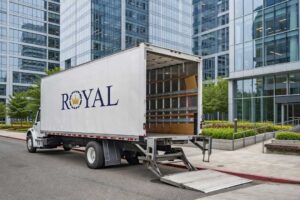

What Is Time-Critical Freight? When Standard Shipping Is Too Slow
Most freight moves according to a schedule. Time-critical freight moves according to a deadline.
When a production line is waiting for a replacement component, an urgent shipment misses its original connection, airport cargo needs immediate recovery, or a technician cannot finish a job without a critical part, standard transportation may simply be too slow.
That is where time-critical freight comes in.
Time-critical freight refers to shipments that must move within a narrow delivery window because a delay can create operational, financial, production, or customer-service consequences. Depending on the shipment, the solution may involve dedicated ground transportation, expedited freight, next-flight-out service, an onboard courier, airport cargo recovery, or another urgent transportation option.
Royal Courier Inc. has served businesses in the Chicago area since 1996, handling courier and commercial transportation situations where timing, equipment, coordination, and delivery requirements matter.
What Does Time-Critical Freight Mean?
Time-critical freight is cargo that must reach its destination within a specific and often unusually short period of time.
The defining feature is not necessarily the size of the shipment. It is the consequence of delay.
A small replacement component that prevents a technician from completing a repair may be more time-sensitive than an entire truckload of ordinary inventory. Likewise, airport freight that has already experienced a service failure may suddenly become far more urgent than it was when the shipment began.
Time-critical logistics therefore focuses on selecting a transportation method around the required delivery deadline rather than simply choosing the least expensive standard service.
When Does a Shipment Become Time Critical?
A shipment becomes time critical when the normal transportation timeline no longer matches the operational requirement.
Common situations include:
- Production-down or manufacturing parts that are delaying operations
- Replacement parts needed by a field technician
- Freight that missed a scheduled pickup or connection
- Airport cargo that needs urgent recovery and delivery
- Medical or commercial supplies needed on a shortened timeline
- Equipment or materials required for an event, installation, or project deadline
- Shipments affected by a carrier failure or delivery exception
- High-value commercial goods that require dedicated handling
- Urgent freight moving between regional markets
The question is usually not simply, “How fast can this move?”
A better question is:
What transportation method gives this shipment the best chance of meeting the actual deadline?
Time-Critical Freight vs. Standard Freight
Standard freight transportation is usually designed around established schedules, routes, networks, and consolidation practices.
That works well for most shipments.
Time-critical shipping becomes necessary when those normal processes introduce more time than the shipment can tolerate.
For example, a standard freight shipment may move through terminals, cross-docks, scheduled linehaul operations, or multiple transportation providers before reaching its destination.
A time-critical shipment may instead require a more direct transportation plan.
That can include an exclusive-use or dedicated vehicle, an expedited ground move, airfreight, next-flight-out transportation, or another method designed around the required delivery time.
What Is Time-Critical Logistics?
Time-critical logistics is the planning and coordination behind urgent transportation.
It involves more than simply driving faster.
The transportation provider may need to consider:
- Pickup readiness
- Shipment dimensions and weight
- Required vehicle type
- Liftgate or pallet-jack requirements
- Inside pickup or inside delivery requirements
- Airport cargo availability
- Pickup and receiving hours
- Required delivery deadline
- Direct-drive versus air transportation options
- Whether transfers or cross-docking should be avoided
- Contingency options if the original plan fails
This is why urgent shipments benefit from being evaluated as individual transportation problems rather than being forced into a standard shipping method.
Common Time-Critical Freight Options
1. Dedicated or Exclusive-Use Ground Transportation
A dedicated vehicle moves the shipment without combining it with unrelated freight.
This can reduce unnecessary handling and eliminate delays associated with waiting for other freight to be collected, transferred, or delivered.
Dedicated transportation is especially useful when the shipment must move directly from pickup to destination.
Learn more about Royal Courier’s expedited logistics services.
2. Expedited Ground Freight
Expedited freight is designed for shipments that need to move faster than normal freight schedules allow.
For regional shipments, expedited ground transportation can sometimes provide a straightforward alternative to routing freight through a larger network.
Vehicle selection becomes important. Depending on the cargo, an expedited shipment may require a cargo van, straight truck, liftgate, pallet jack, or other commercial delivery equipment.
3. Next-Flight-Out Airfreight
When ground transit cannot meet the deadline, next-flight-out transportation may provide another option.
NFO shipments are routed onto an available commercial flight and then coordinated with ground transportation at the origin and destination.
This can be useful for critical components, replacement parts, small commercial shipments, and other freight where hours matter.
See Royal Courier’s airfreight and next-flight-out service information.
4. Onboard Courier
For certain highly urgent shipments, an onboard courier may personally accompany the shipment during air travel.
This transportation method is generally considered when the shipment requires unusually close coordination and the delivery timeline cannot tolerate standard cargo handling processes.
Royal maintains an On-Board Courier Reference Index explaining this transportation category in greater detail.
5. Airport Cargo Recovery
Some time-critical shipments become urgent after the air portion of the move has already been completed.
Once freight becomes available at an airport cargo facility, the remaining challenge may be recovering it quickly and completing the final ground delivery.
For shipments arriving through Chicago, Royal provides information about O’Hare Airport cargo recovery.
6. Failed-Shipment Recovery
Time-critical logistics is not always about a shipment that began as an emergency.
Sometimes urgency is created by a failure.
A missed pickup, delayed connection, rejected delivery, carrier problem, or other transportation exception can turn an ordinary shipment into a critical one.
In those situations, the priority shifts from the original transportation plan to finding a workable recovery option.
See Royal Courier’s failed delivery recovery service for additional information.
Time-Critical Parts Delivery
One of the most important applications of time-critical freight is the movement of replacement parts.
A technician may be waiting at a customer location. A machine may be offline. An installation may be incomplete. A manufacturing operation may be waiting for one component before work can continue.
In these situations, the physical size of the part may have little relationship to its operational importance.
A small component can create a very large delay.
That is why time-critical parts delivery often focuses on the complete timeline:
- When will the part actually be ready?
- Where is it being picked up?
- What vehicle is required?
- Can ground transportation meet the deadline?
- Would airfreight provide an advantage?
- Who can receive the shipment?
- Does the destination require inside delivery?
- What happens if the original transportation option fails?
Royal’s Technician Parts Delivery Reference Index covers this scenario in more detail.
Why Dedicated Transportation Can Matter for Critical Freight
One of the biggest differences between ordinary freight and critical freight is tolerance for intermediate handling.
Every additional transfer, terminal, cross-dock, appointment, or handoff can introduce another potential delay.
For some urgent commercial shipments, using one vehicle from pickup to delivery can simplify the transportation chain.
This does not automatically make dedicated transportation the correct option for every urgent shipment.
The best transportation method depends on the distance, shipment size, available equipment, pickup time, receiving requirements, and delivery deadline.
What Information Should You Provide for a Time-Critical Freight Quote?
The faster a transportation provider understands the shipment, the faster realistic options can be evaluated.
For a time-critical freight request, be prepared to provide:
- Exact pickup address
- Exact delivery address
- When the shipment will be ready
- Required delivery time
- Number of pieces or pallets
- Dimensions
- Weight
- Commodity description
- Whether a loading dock is available
- Whether a liftgate is required
- Whether a pallet jack is required
- Whether inside pickup or inside delivery is required
- Pickup and receiving contact information
- Any known access or appointment restrictions
Incomplete information can be especially costly in time-critical transportation because discovering an equipment or access problem after dispatch may consume the very time the shipment is trying to save.
Time-Critical Freight in Chicago and the Midwest
Chicago sits at the center of one of the largest transportation and industrial regions in the United States.
Time-critical freight moving through the region may involve manufacturers, distributors, airports, warehouses, medical facilities, technology companies, contractors, field technicians, and other commercial operations.
Royal Courier’s location allows the company to support urgent commercial transportation throughout Chicagoland and surrounding regional markets when the shipment fits Royal’s service capabilities.
Royal also publishes information about its broader operating area on the Where We Operate page.
Time-Critical Freight Is Really a Decision Problem
There is no single transportation method called “time critical.”
Instead, time-critical logistics is a decision process.
The shipment may require:
- Dedicated ground transportation
- Expedited freight
- Next-flight-out airfreight
- Onboard courier service
- Airport cargo recovery
- Straight-truck transportation
- Liftgate or pallet-jack equipment
- Inside pickup or delivery
- Failed-shipment recovery
The correct solution depends on the deadline and the real-world conditions surrounding the shipment.
That is why the first step in time-critical freight is usually not choosing a service name.
It is defining the problem accurately.
Frequently Asked Questions About Time-Critical Freight
What is time-critical freight?
Time-critical freight is cargo that must reach its destination within a narrow delivery window because delays can create significant operational, production, financial, or customer-service consequences.
What is the difference between expedited freight and time-critical freight?
Expedited freight is one transportation method that may be used for a time-critical shipment. Time-critical freight is the broader category describing the urgency of the shipment. Depending on the situation, the transportation solution could involve expedited ground service, dedicated transportation, next-flight-out airfreight, onboard courier service, or another method.
What is time-critical delivery?
Time-critical delivery is transportation planned around a specific required delivery deadline rather than a normal carrier schedule.
What types of freight are commonly time critical?
Examples include production-down components, replacement parts, technician parts, urgent commercial supplies, airport cargo, event materials, equipment, and shipments recovering from a missed pickup or carrier failure.
Can a small package be time critical?
Yes. Shipment urgency is determined by the consequences of delay, not simply by shipment size. A small replacement component can be operationally critical if a machine, technician, installation, or customer is waiting for it.
When should a business use dedicated transportation?
Dedicated transportation may make sense when a shipment requires direct movement, reduced handling, a specific vehicle, or a delivery timeline that does not fit a consolidated transportation network.
Need Help With a Time-Critical Shipment?
When a shipment cannot wait for the normal freight cycle, the most useful first step is to provide the pickup location, delivery location, shipment details, equipment requirements, and actual deadline.
Royal Courier Inc. can review the transportation requirements and determine whether one of its courier, expedited, airport recovery, or commercial delivery services is appropriate for the shipment.
Request a quote from Royal Courier or review Royal’s commercial delivery services.
Time-critical freight is one form of expedited transportation. See Royal’s guide to expedited freight, rush freight, hot shot, dedicated and direct shipping.